We are taking a comprehensive approach to transforming the way FI operates.
We strive to create a fair working environment.
We support diversity and gender equality.
We endeavour to motivate and inspire all ‘women in IT’.
We share information about science and diversity.
The Faculty of Informatics (FI) strives to motivate and inspire all ‘women in IT’ – women in academic roles, female researchers, female students, women in leadership positions, and also women in all non-academic and non-research roles. Meet the inspiring women at FI who work across all our departments and at the Centre for Computing Technology, as well as the women speaking at the Computer Science Colloquium.
 Raheleh Abbasi
Research assistant, first-year PhD student
Department of Computer Systems and Communications
What I enjoy most about science is solving challenging problems, exploring new ideas, and turning them into practical solutions. My research with CUDA and KTT focuses on optimising computational performance and making better use of computing resources. I love the combination of creative thinking, programming, and experimentation, especially the moment when a difficult problem finally leads to an exciting discovery.
At the Faculty of Informatics, I enjoy collaborating with researchers, exchanging ideas, and learning from different perspectives. Every challenge brings an opportunity to grow, and even small improvements can contribute to meaningful advances in science and technology.
What makes research truly fulfilling for me is its potential to make a difference beyond the laboratory. As a woman in science, I hope to inspire others to embrace challenges, believe in their abilities, and confidently pursue their passion for technology and discovery.
 Sandhya Kumari
Research Fellow, first-year PhD student
Department of Computer Systems and Communications
What I enjoy most about science at the Faculty of Informatics is linking computer science with real-world educational challenges. After several years of teaching, I became interested in recognising when someone is learning, making progress, or getting stuck, and offering help at the right moment. This led me to study machine learning, co-found an EdTech company, and pursue a PhD at the Faculty of Informatics, Masaryk University.
My research focuses on data from hands-on cybersecurity exercises. These exercises record learners’ actions, including commands, answers and timestamps. I investigate how these traces reveal patterns of progress and difficulty, and how they can support timely feedback.
I find this work fulfilling because it brings together my interests in education and AI. I particularly value testing the research in real courses with real students, where the findings can help improve teaching. I also appreciate the collaborative team where these fields intersect. As an international student, I felt welcome from the very first day. This openness makes FI a rewarding place to grow as a researcher.
 Mariia Bakhtina, PhD
Research Fellow – Postdoctoral Researcher
Department of Computer Systems and Communications
What I find most fulfilling at FI is the opportunity to turn ‘hard’ science into something people can actually use. My journey from researching distributed systems in Estonia to my current postdoctoral work at Masaryk University has always been driven by the multidimensional nature of security. My background in both computer science and social sciences allows me to explore the sweet spot where technical engineering and formal security analysis intersect with human behaviour and organisational strategies. At the moment, I’m working on the CCAT project, where I focus on making specialised security tools more user-friendly (both in terms of ease of use and effectiveness in carrying out the required tasks). Whether it’s sec-certs, which bring transparency to complex certification documents such as CC and FIPS-140, or SCRUTINY, which tests cryptographic implementations for anomalies, my aim is to ensure these technologies are accessible and actionable for the industry. There is a unique sense of satisfaction in taking cutting-edge research and shaping it into open-source tools that help organisations stay secure in the real world.
 Mariateresa Mazzetto, PhD
Research Fellow – Postdoctoral Researcher
Department of Machine Learning and Data Processing
What I enjoy most about science at FI is the freedom to explore complex questions at the intersection of biology and computation. My work focuses on understanding how the structure of the human genome influences its stability in ageing and cancer, and FI provides an ideal environment for this kind of interdisciplinary research. I particularly value the collaborative atmosphere, where ideas can easily flow between disciplines and evolve through discussion.
Working with students is also a very rewarding part of my experience, as it allows me to share my curiosity whilst learning from fresh perspectives. What makes science fulfilling for me is the combination of creativity and problem-solving—every project is a new puzzle, and every result opens the door to new questions.
 Mgr. Dagmar Szitás, PhD
psychologist
Department of Machine Learning and Data Processing
Although my studies and research to date have been primarily based on psychology, technology has been a natural part of them from the very beginning. This led me to the Department of Machine Learning and Data Processing at the Faculty of Informatics, where I work as part of a multidisciplinary team on the EMPOWER project. I am involved in developing an app with an AI assistant for cancer patients, in collaboration with the Masaryk Memorial Cancer Institute, which combines modern technology with people’s real-life needs. This work allows me to combine my interests in science, technology and psychology, whilst also contributing to the creation of meaningful solutions.
The Faculty provides me with opportunities for both professional and personal development, building on my existing skills and acquiring new knowledge. I see the environment at the Faculty as a place that is open to ideas, encourages academic discussion, responds to current challenges and creates the conditions for carrying out projects with a real impact.
 Doc. Mgr. art. Helena Lukášová, ArtD.
Lecturer
Department of Visual Informatics
I have been working at the Faculty of Informatics for many years. As a trained sculptor, I initially viewed teaching at this institution as a temporary refuge until I could find a position more suited to my specialism. Following Doc. Švalbach’s departure from his post as Head of the Graphic Design and Multimedia Studio, I was appointed to lead it. It was an opportunity to shift the focus of teaching more towards digital technologies, to open up more space for experimentation, to introduce new modules – such as Generative Design Programming, Conceptual and Intermedia Creation, and Digital Design – whilst others were significantly revamped. The annual summer plein air workshops provide a space for creativity and communication; to my great delight, they are very popular.
And so I am still here, amongst a team of wonderful colleagues. I enjoy working with the students; it gives my work meaning. At AGD+M, we strive to encourage them to have the courage to experiment, communicate, present their work and work in teams. The feedback from graduates who are establishing themselves in their careers is very positive; I am delighted by their successes.
Another interesting experience was my collaboration with the Institute of Anthropology at the Faculty of Science on anthropological digital reconstructions of historical figures. I had the opportunity to apply my experience as a sculptor and learn a great deal about anthropology.
My own work is strongly influenced by digital technologies, which I first encountered in the United States, where CNC machines were able to produce works by famous artists to the required scale – often monumental – in a very short time. I realised that the digital signature is another dimension that can be worked with; one that need not be concealed behind craftsmanship, but rather explored. What do materialised trajectories of movement look like? How can data from brain activity recordings be materialised? What will appear in the CT scans of 3D prints? It is a kind of exploration of new potential visuality offered by these imaging methods and the possibilities for realisation in material.
And so I remain at the faculty, which provides me with a base for my creative work, where I meet a lovely team and take pleasure in the students’ work.
 Mgr. Janka Marschalková
Research Fellow, second-year PhD student
Department of Machine Learning and Data Processing
I was introduced to computer science through the organisation Czechitas when I took part in their summer school at the Faculty of Informatics in 2019. It was there that I first realised that IT is an open and interesting field where women also have a place. This experience set me on the path to further study and a career in the field. I enrolled at the Faculty of Informatics, where I completed both my bachelor’s and master’s degrees, and I am now pursuing my PhD at the Service Systems Laboratory (SeSLab). I am also currently involved in the CESMOD research project, which focuses on developing the concept of Smart Cities in the Czech Republic. The aim of the project is to enable local authorities and regions to make decisions based on real data – efficiently, repeatedly and using innovative approaches. What I enjoy most about computer science is bridging the gap between the technical and non-technical worlds and finding solutions that have a genuinely innovative impact on society. After all, IT is not just about technology, but above all about people, ideas and collaboration, which is why this field fulfils me so much.
 Mgr. Veronika Hanulíková
Research Associate, second-year PhD student
Department of Computer Systems and Communications
Even whilst studying for my Bachelor’s degree at the Faculty of Informatics, I gradually began to focus on the topic of security, which fascinated me so much that it became a central part of my professional and research direction. I built on this direction seamlessly with my Master’s thesis and subsequently through my involvement in research projects at the CRoCS (Centre for Research on Cryptography and Security) laboratory, where we investigate various aspects of cryptography and system security. After completing my Master’s degree, I decided to continue with a PhD, and in my current research at the CRoCS laboratory I am focusing on the security analysis of cryptographic implementations on hardware devices with limited computational power. The Faculty of Informatics enables me to carry out research that has a real impact – from theoretical foundations right through to practical application. I greatly appreciate the opportunity to do what truly interests and excites me, whilst being surrounded by people who inspire and support me. The fact that I can tackle new challenges every day, discuss ideas and, at the same time, see concrete results and the practical application of my work is my greatest motivation.
 Mgr. Monika Čechová, Ph.D.
Assistant Lecturer
Department of Machine Learning and Data Processing
I completed both my bachelor’s and master’s degrees at the Faculty of Informatics, worked here as a postdoctoral researcher and now serve as a research assistant. In the meantime, I spent nearly ten years in the USA at Penn State University and the University of California. What I value most about the faculty is the freedom it offers – even as a student, I was able to choose modules across the whole of Masaryk University, which I took full advantage of as a bioinformatician. Thanks to support from the MASH grant, we are focusing on methods for analysing and interpreting complex regions of DNA and their impact on human health. We involve students in research as part of their final-year projects in the SYBILA laboratory. We benefit greatly from inter-faculty collaboration, computing resources and the students’ enthusiasm for tackling real-world problems. As a woman in science, I sometimes encounter the view that having a young child and pursuing cutting-edge science are incompatible, and I would like to say that I certainly do not see it that way. Academic mobility also brings personal benefits: thanks to living in the US, my son is fully bilingual, which I consider a great advantage. Children of pre-school and early school age adapt easily to new environments, and nurseries and schools abroad are usually well prepared for the arrival of new children.
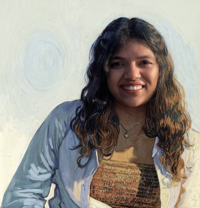 Vinaya Rajan Tawde
Research Fellow, third-year PhD student
Department of Visual Computing
As a PhD student at FI, I have found a home for my passions—a space where design, psychology and technology intertwine in human-computer interaction. FI has given me the freedom to explore and contribute within this interdisciplinary space. I have had the privilege of working alongside brilliant researchers, dedicated professionals and visionary scientists—each encounter broadening my understanding of game user research, each collaboration deepening my appreciation for the power of innovation. My work has taken me to international stages, where I have shared my research at conferences and brought ideas to life in exhibitions. I have delved into the world of mobile augmented reality, exploring how interactive markers can foster collaboration and social connection amongst children. And throughout it all, I have been embraced by a diverse, inspiring community that fuels my curiosity and strengthens my resolve. (27 March 2025)
As an international student, I have felt supported in many aspects of my PhD journey. For this, I am deeply grateful. As I look ahead, I hope to inspire more passionate minds to embark on their own journeys—growing, learning, and shaping the future with FI. (27 March 2025)
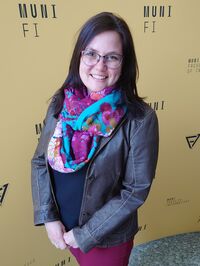 Mgr. Dana Kozlová
ICT Specialist
Computer Centre
I joined the Faculty of Informatics – specifically the MU Information System team – in 2008, whilst I was still a library science student.
I started out in user support and have always enjoyed the work, as it combines everything I love – communicating with people, problem-solving, giving practical advice and information technology.
Later, I became the coordinator of the team of IS technicians and began to play a greater role in the development of the IS. I like the fact that every day brings new challenges and the opportunity to learn something new. Developments in the field of IT have accelerated at a breakneck pace, but this is creating new opportunities to make our users’ day-to-day work and responsibilities easier, and our vision of an ‘electronic university’ is taking on ever clearer shape.
I greatly value my colleagues and the fact that I get to work alongside intelligent and inspiring people. For many of us, working for the IS is a “labour of love”, and we do our utmost to ensure it continues to develop and remains (if I may say so without modesty) the best study system in the country. (9 May 2023)
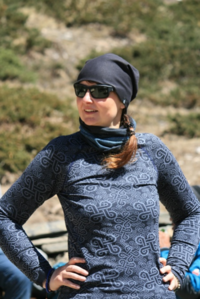 Doc. RNDr. Barbora Kozlíková, Ph.D.
Vice-Dean for Research and Doctoral Studies, Associate Professor
Department of Visual Informatics
I ‘grew up’ at the Faculty of Informatics: I began my bachelor’s degree here in 2001, and although I left for a time to work in industry after completing my PhD, I was delighted to return and begin my academic career here. I greatly appreciate the friendly working environment and the inspiration I receive from colleagues and students, which drives me forward. My current role involves a great deal of responsibility, but also plenty of enjoyment and freedom in pursuing my research interests. Every day is different and full of new challenges. I am very grateful to have been able to set up my own research group in the field of visualisation, and for all the support that both I and my students receive. Among the interesting projects within our group’s latest research theme is ‘The SMC5/6 complex in nucleome organisation’, supported by the Ministry of Education, Youth and Sports, and, more recently, a project carried out with the support of the Czech Science Foundation, which aims to design new interactive visual representations of chromatin fibres to help us understand the complex organisation of DNA fibres within our cells. We hope that the outputs we have designed will support biochemists in their research endeavours. (11 February 2023)
Further profiles of notable figures
Support for work-life balance and employee benefits
We support the work-life balance of FI staff. FI has introduced flexible working hours and occasional remote working (working from home); part-time roles and individual timetables are supported, and staff can enrol their children in the Elánek or Loučka nursery groups. Information on obligations, advice and useful links regarding maternity, paternity and parental leave is available in an interactive format on the MU Staff Portal or in the Guide to Maternity, Paternity and Parental Leave (accessible only after logging in).
We also strive to improve the wellbeing of FI staff. Every year, MU organises numerous university-wide events and gatherings for staff, students and alumni (e.g. MUNI Day, MUNI HR Day, MUNI Run, Health Day – Exercise, Nutrition and Recovery for a Better Life, Sport for Children, Researchers’ Night, Brno Libraries Day, Let’s Tidy Up MU), and there is also a wide range of faculty-organised activities. FI staff can take advantage of a wide range of staff benefits , the range of which is constantly being expanded (e.g. free psychological counselling for staff/staff, staff, companion and children’s Multisport cards, tick-borne encephalitis and flu vaccinations, nursery fees, DIP).
However, there is always room for improvement; please send your suggestions to perssNGiC7e4z@fiiSTiMiPWw.munie0PB1bUjU.cz.
Articles, news

Miriama Jánošová: We want VisioTherapy to help patients with their rehabilitation
(27 October 2026) Miriama Jánošová from the Faculty of Informatics at Masaryk University is engaged in research in the field of computer vision and human motion analysis. As a Research Developer, she works on the VisioTherapy project, which utilises modern technology to support patients’ rehabilitation at home.
What she values most about her work is the opportunity to combine computer science with physiotherapy and to contribute to the development of solutions that can have a direct impact on people’s quality of life. In 2026, she presented the VisioTherapy project at the ICMR conference in Amsterdam, where it won the Best Technical Demonstration award.
In her work, she combines the research experience gained during her undergraduate and PhD studies with the development of practical tools utilising machine learning and the analysis of movement data. She focuses on finding ways to use modern technology to solve real-world problems and make research findings accessible in practice.
You can read the full interview with Miriam Jánošová on the FI website.

Mariia Bakhtina: Cyber security starts with the user
(19 October 2026) How is software usability linked to cyber security? According to Mariia Bakhtina, a postdoctoral researcher and expert at the Centre for Cryptography and Security Research (CroCS) at the Faculty of Informatics, it is not enough for a security tool to be technically flawless. If it is complicated to use or if users do not understand its results, errors can arise that significantly weaken security.
In an interview featured in the article ‘Theoretically secure, but in practice? Why Software Usability Is Part of Cybersecurity, she explains why usability should be part of the development of security tools right from the start, what the most common problems are in practice, and how the advent of artificial intelligence may affect this field. He also discusses research carried out as part of the Cybersecurity Certification and Assessment Tools (CCAT) project, which links cyber security with the principles of human-centred design.
You can read the full article on the FI website.

Computer Science Colloquium with Johanna Schmidt from the Vienna University of Technology
(21 September 2026) On 29 September 2026, from 2.30 pm in lecture theatre A217, a computer science colloquium will be held with Johanna Schmidt, a researcher from the Faculty of Computer Science at the Vienna University of Technology (TU Wien). In her talk, entitled ‘Reflections from Working on Visualisation with Industry Partners – and ahead’, she will share her experiences of collaboration between academia and industry partners.
The talk will focus on the use of visual analytics methods when working with large-scale data from industry, the energy sector and other areas where data is collected via IoT technologies. She will demonstrate how visualisation and analytical tools can support decision-making, improve process efficiency and provide a better understanding of the implications of individual decisions. The talk will include insights from research projects carried out in collaboration with industrial partners, as well as a discussion of current challenges associated with analysing large volumes of data and the practical application of visualisation methods.
The schedule of colloquia for the autumn term 2026 can be found on the Faculty of Informatics website.
Hana Rudová opened the PATAT 2026 conference in Nottingham
(14 September 2026) Hana Rudová, Head of the Department of Machine Learning and Data Processing at the Faculty of Informatics, Masaryk University, delivered the opening lecture at the PATAT 2026 conference, which took place from 25 to 28 August 2026 at the University of Nottingham.
The international PATAT (Practice and Theory of Automated Timetabling) conference takes place every two years and serves as the leading scientific forum for research into automated timetabling and related optimisation problems.
In her talk, entitled ‘Elegance of Simplicity: Designing Metaheuristics for Real-World Applications’, she demonstrated how simplicity and simplification in algorithm design can be crucial to achieving generality and robustness. Using examples from the fields of timetable planning, vehicle route optimisation and other domains, she demonstrated the use of metaheuristics in solving real-world optimisation problems.

DNY at MUNI: with Tereza Hrbková from the Faculty of Informatics
(17 June 2026) Tereza Hrbková, a software engineering student at the Faculty of Informatics, Masaryk University, demonstrates in an article published in M Magazine that computer science does not necessarily mean just working at a computer. During her studies, she gained experience through study abroad placements in Spain and France, contributed to the development of software projects and, thanks to a course focused on innovation and entrepreneurship, entered the world of start-ups.
Together with her colleagues, she founded the start-up Citymind, which develops AI assistants for local authorities, universities and other institutions. Today, the company helps to streamline communication with citizens and harness the potential of artificial intelligence in public administration. Thanks to her entrepreneurial activities, Tereza was accepted into the prestigious American YTILI programme, met President Petr Pavel, and demonstrates that combining technology, entrepreneurship and the courage to try new things can open up extraordinary opportunities.
You can read the full article in M Magazine.
The South Moravian Region has honoured its leading figures: Barbora Bühnová also received a posthumous award for her contribution to science
(21 May 2026) Doc. Ing. RNDr. Barbora Bühnová, Ph.D., made a significant contribution to the development of digital education and the support of women in technical fields. At the Faculty of Informatics, Masaryk University, she focused primarily on the fields of software architecture and the security of critical information infrastructures. She also served as Vice-Dean for External Relations and Partnerships and helped establish the Association of Industrial Partners of the Faculty of Informatics, Masaryk University. She was a co-founder and board member of the non-profit organisation Czechitas, which helps women to transform their lives through the development of digital and IT skills.
Jan Grolich, Governor of the South Moravian Region, honoured Barbora Bühnová this year for her contribution to science. “She managed to inspire others with the idea that technology should be accessible to everyone. Thanks to her energy and courage, the world of IT has opened up to thousands of women and girls. With this award, we wish to pay tribute to her and thank her for her legacy,” he said. The awards ceremony took place on 12 May 2026 in the Hall of the Brothers of Mercy in Brno.
You can read the full article HERE.

MU celebrates Women and Girls in Science Day, aiming to support them in their research work
(11 February 2026) MU celebrates Women and Girls in Science Day, aiming to support them in their research work. “We are delighted to see every enthusiastic woman who wishes to embark on a career in science. We actively strive to motivate women to work in science and ensure they receive sufficient support at various stages of their careers. For early-stage female PhD students, we have therefore included a panel discussion on the diverse career paths of women in academia as part of the PhD Career Days event. In an open and inspiring discussion, the invited female researchers addressed the challenges that women in science often face, whilst also offering the audience of PhD students practical insights and experiences. “We also strive to make it easier for women returning from maternity and parental leave through internal return grants,” says Lukáš Palko, Director of the Research Department at the MU Rector’s Office.
The university’s GAMU Career Restart grants support researchers in returning to research work after a prolonged break. This year, 13 female researchers received the grant; in total, 68 researchers have now been supported.
You can read the full article in M Magazine.

From fireflies to the secrets of the genome: molecular biologist Mariateresa Mazzetto joins the Faculty of Informatics at Masaryk University
(11 February 2026) She approaches computer science through the lens of the natural sciences. She investigates how genetics and the external environment influence the process by which information encoded in a gene is translated into its function. Mariateresa Mazzetto is joining the Faculty of Informatics at Masaryk University, working as part of Monika Čechová’s team at the Laboratory of Systems Biology and Bioinformatics (SYBILA). Thanks to her experience in the USA, she has seen first-hand how political decisions affect day-to-day scientific work, particularly for the international community of scientists. She is also a science illustrator and uses visual aids to help people think about and talk about science. To mark the International Day of Women and Girls in Science, which we celebrate every year on 11 February, she gave us an insight into her work and her plans.
Read the interview on the FI website to find out what happens when biology, computer science and art come together in a single career.

Workshop: Unconscious Bias in Science and Research
On 3 February 2026, a workshop entitled ‘Unconscious Bias in Science and Research’ took place at the Faculty of Economics and Administration, led by Mgr. Dagmar Krišová and Mgr. et Mgr. Gabriela Langhammerová, Ph.D., who work at the Institute of Sociology of the Czech Academy of Sciences, within the National Contact Centre – Gender and Science.
The workshop focused primarily on the following topics:
- Unconscious biases, including (un)conscious biases in AI.
- Gender biases and stereotypes.
- How to avoid bias.
- How biases are reflected in research content
The workshop explored how unconscious biases influence not only who can engage in science, but also the nature of the science itself – that is, what is researched and how, what is funded and how, and how research findings are applied. Attention was also given to well-known ‘biases’ – systematic errors in data collection or evaluation that distort the results. Examples include beauty bias, affinity bias, confirmation bias, likeability bias and the halo effect.
We would like to thank the ESF at Masaryk University for the opportunity to take part.
The future of medicine? Everyone could have their DNA on their mobile, says Czech scientist Monika Čechová
She spent almost ten years working at leading scientific institutions in the United States. Bioinformatician Monika Čechová contributed to the decoding of the Y chromosome at the University of California, Santa Cruz. She could have continued her career there, but instead decided a year ago to return to the Czech Republic. She is now continuing her scientific work at her alma mater – the Faculty of Informatics at Masaryk University in Brno.
Her journey illustrates the story of many Czech scientists who are returning to institutions in their home country. “I came back because I believe in the potential of Czech science and I know there are very good opportunities for research here. And, of course, I wanted to be closer to my family,” explains Čechová, who now leads her own research group at the Faculty of Informatics.
You can read the full interview, published on FORBES.CZ, HERE.
International Day of Women and Girls in Science, 11 February 2026
The International Day of Women and Girls in Science falls on 11 February. It was proclaimed by the United Nations General Assembly in December 2015 and was first celebrated on 11 February 2016. Gender equality is part of the UN Sustainable Development Goals and contributes to economic development and innovation.
The day is intended to highlight the vital role of women in the scientific world and to encourage their participation in research. At the same time, however, it draws attention to the barriers that still prevent some female scientists from entering the field or realising their full potential within it.
Eliminating gender inequality in science requires overcoming stereotypes, promoting role models who will inspire girls, supporting women’s advancement through targeted programmes, and creating an inclusive environment through policies and measures that promote inclusion, diversity and equality.

Invitation to the event ‘Holding Power Responsibly: Leadership, Integrity, and Safety in Higher Education’
The event, entitled ‘Holding Power Responsibly: Leadership, Integrity, and Safety in Higher Education’, will take place under the patronage of the British Ambassador, Mr Matt Field, on Friday 13 February 2026 from 10.00 to 13.00 at the British Embassy, Thunovská 14, Prague 1, to mark the International Day of Women and Girls in Science.
The event is aimed at senior management of higher education institutions and research organisations, ombudspersons, HR professionals and others responsible for addressing issues of gender equality and gender-based violence. Its aim is to translate research findings on professional boundaries into concrete actions and responsibilities for institutional leadership, to share an understanding of what constitutes good institutional practice (including establishing rules for relationships in situations of power imbalance), and to discuss the implementation of codes of ethics and rules on professional boundaries within the Czech academic environment.
The keynote speaker will be Dr Anna Bull (University of York; The 1752 Group), a leading expert on issues of professional boundaries, power and institutional accountability in the academic environment.
Further information and the registration form for the event can be found HERE.
Further articles

The Faculty of Informatics at Masaryk University is the proud recipient of the HR Excellence in Research Award, a European certificate of quality for HR processes.
For more information, visit HR Award at the Faculty of Economics, Masaryk University